Hey there! I’m a supplier of vial filling lines, and today I wanna chat about the filling methods used in a vial filling line. It’s super important to know these methods if you’re in the business of filling vials, whether it’s for pharmaceuticals, cosmetics, or other liquid products. Vial Filling Line

Gravity Filling
Let’s start with gravity filling. This is one of the simplest and oldest methods out there. How it works is pretty straightforward. The liquid is stored in a tank above the vials. The vials are placed under the filling nozzles, and then the liquid just flows down into the vials by the force of gravity.
The advantage of gravity filling is that it’s really easy to set up and maintain. You don’t need a lot of fancy equipment or complex controls. It’s also great for filling thin – viscosity liquids like water – based solutions. But it does have its limitations. If the liquid is too thick, it won’t flow smoothly, and you might end up with inconsistent fill levels. And it’s not very fast compared to some other methods.
Piston Filling
Next up is piston filling. This method uses a piston to draw in a specific amount of liquid from a reservoir and then push it into the vial. The piston moves back and forth inside a cylinder, and the volume of liquid it dispenses is determined by the stroke length of the piston.
Piston filling is really accurate. You can control the fill volume very precisely, which is crucial when you’re dealing with expensive or critical products. It can handle a wide range of viscosities, from thin liquids to thick creams. However, it can be a bit more complex to operate and maintain. The pistons and cylinders need to be cleaned regularly to prevent contamination, and there are more moving parts that can wear out over time.
Peristaltic Filling
Peristaltic filling is another interesting method. It uses a peristaltic pump, which is basically a tube that’s squeezed by a series of rollers. As the rollers move along the tube, they create a wave – like motion that pushes the liquid through the tube and into the vial.
One of the big advantages of peristaltic filling is that it’s very gentle on the liquid. This is great for products that are sensitive to shear forces, like some biological or pharmaceutical substances. It also has a low risk of contamination because the liquid only comes into contact with the inside of the tube. But the fill speed can be a bit slow, and the tubes need to be replaced regularly to ensure accurate filling.
Time – Pressure Filling
Time – pressure filling is a method where the liquid is stored in a pressurized tank. The filling nozzle is opened for a specific amount of time, and the pressure forces the liquid into the vial. The fill volume is determined by the pressure in the tank and the time the nozzle is open.
This method is fast and can be used for a variety of liquid viscosities. It’s also relatively easy to control. You can adjust the pressure and the filling time to get the desired fill volume. However, it might not be as accurate as piston filling, especially for very small fill volumes. And if the pressure isn’t consistent, you can end up with inconsistent fill levels.
Overflow Filling
Overflow filling is often used when you need to ensure that all the vials are filled to the same level. In this method, the vials are filled until the liquid overflows. The excess liquid is then collected and recycled.
The main advantage of overflow filling is that it gives a very consistent fill level. It’s also good for filling vials with a fixed headspace. But it can be wasteful, especially if the liquid is expensive. And it might not be suitable for all types of products, as some liquids might foam or splash when they overflow.
Rotary Filling
Rotary filling is a high – speed filling method. The vials are placed on a rotating carousel, and as the carousel turns, the filling nozzles dispense the liquid into the vials. This method is great for large – scale production because it can fill a large number of vials very quickly.
However, rotary filling machines are more expensive to purchase and maintain. They also require a more complex setup and calibration. And they might not be as flexible as some other methods when it comes to changing the fill volume or the type of vial.
Considerations for Choosing a Filling Method
When choosing a filling method for your vial filling line, there are several factors to consider. First of all, you need to think about the viscosity of the liquid. If it’s a thin liquid, gravity filling or time – pressure filling might be a good choice. For thick liquids, piston filling or peristaltic filling could be more suitable.
The fill volume is also important. If you need very precise fill volumes, piston filling is probably your best bet. But if you’re filling large volumes, rotary filling or overflow filling might be more efficient.
The production speed is another crucial factor. If you have a high – volume production requirement, high – speed methods like rotary filling or time – pressure filling are better. But if you’re doing small – batch production, a simpler method like gravity filling might be sufficient.
And of course, you need to consider the cost. Some methods, like piston filling, require more expensive equipment and maintenance. Others, like gravity filling, are more cost – effective.
Our Vial Filling Lines
As a vial filling line supplier, we offer a wide range of filling solutions to meet different needs. Our machines are designed to be reliable, efficient, and easy to operate. We can customize the filling method according to your specific requirements, whether you’re filling pharmaceuticals, cosmetics, or other liquid products.
We use the latest technology to ensure accurate and consistent filling. Our piston filling machines can handle a wide range of viscosities and offer precise fill volumes. Our peristaltic filling systems are gentle on sensitive liquids and have a low risk of contamination. And our rotary filling machines are perfect for high – volume production.
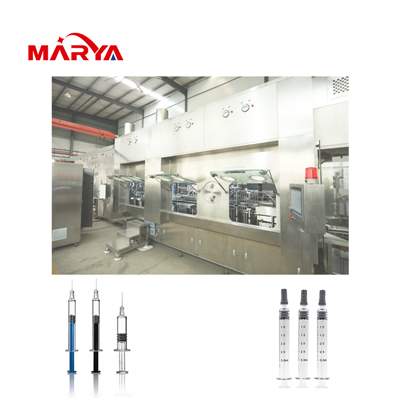
If you’re in the market for a vial filling line, we’d love to have a chat with you. We can help you choose the right filling method for your products and production needs. Whether you’re a small startup or a large – scale manufacturer, we have the expertise and the solutions to meet your requirements.
RTU Container Filling Line So, if you’re interested in learning more about our vial filling lines or want to discuss your specific needs, don’t hesitate to reach out. We’re here to help you take your vial filling process to the next level.
References
- "Handbook of Pharmaceutical Manufacturing Formulations: Liquid Products"
- "Packaging Machinery Operations Manual"
Shanghai Marya Pharmaceutical Engineering and Project Co., Ltd.
We’re well-known as one of the leading vial filling line manufacturers and suppliers in China. Please feel free to buy high quality vial filling line made in China here from our factory. For more information, contact us now.
Address: China(Shanghai) Pilot Free Trade Zone, North Fute Road, No. 211, 302 Parts, Room 368.
E-mail: contact@marya.com.cn
WebSite: https://www.marya-pharmaceutical-solution.com/
