Roller bearings are crucial components in a wide range of industries, from automotive and aerospace to heavy machinery and industrial equipment. As a roller bearing supplier, I understand the significance of adhering to international standards to ensure the quality, performance, and reliability of our products. In this blog post, I will delve into the international standards for roller bearings, their importance, and how they impact our business. Roller Bearing

The Importance of International Standards
International standards play a vital role in the manufacturing and use of roller bearings. They provide a common framework for manufacturers, suppliers, and users to ensure that products meet specific quality, safety, and performance requirements. By adhering to these standards, we can guarantee that our roller bearings are compatible with various applications, interchangeable, and reliable.
One of the primary benefits of international standards is that they enhance product quality. Standards define the materials, dimensions, tolerances, and manufacturing processes that must be followed to produce high-quality roller bearings. This ensures that our products are consistent in terms of performance, durability, and reliability, reducing the risk of premature failures and costly downtime.
Another important aspect of international standards is safety. Roller bearings are often used in critical applications where failure can have severe consequences, such as in automotive engines, aircraft landing gears, and industrial machinery. Standards specify the safety requirements and testing procedures that roller bearings must meet to ensure their safe operation. This helps to protect the end-users and prevent accidents and injuries.
International standards also promote global trade by facilitating the exchange of roller bearings between different countries. By adhering to common standards, manufacturers can produce products that are recognized and accepted worldwide, eliminating trade barriers and reducing the need for costly product modifications. This allows us to expand our market reach and serve customers in different regions more effectively.
Key International Standards for Roller Bearings
There are several international standards organizations that develop and publish standards for roller bearings. The most widely recognized and used standards are those developed by the International Organization for Standardization (ISO) and the American National Standards Institute (ANSI).
ISO Standards
The ISO is an independent, non-governmental international organization that develops and publishes standards in various fields, including mechanical engineering. ISO standards for roller bearings cover a wide range of aspects, such as dimensions, tolerances, materials, performance, and testing methods.
One of the most important ISO standards for roller bearings is ISO 15:2011, which specifies the geometric product specifications (GPS) and verification of linear sizes of rolling bearings. This standard defines the basic dimensions, tolerances, and surface roughness requirements for roller bearings, ensuring their compatibility and interchangeability.
Another significant ISO standard is ISO 281:2007, which provides the calculation methods for the dynamic load ratings and rating life of rolling bearings. This standard helps manufacturers and users to select the appropriate roller bearings for their applications based on the expected load, speed, and operating conditions.
ISO also publishes standards for specific types of roller bearings, such as cylindrical roller bearings (ISO 15312:2003), tapered roller bearings (ISO 15313:2003), and spherical roller bearings (ISO 15314:2003). These standards define the design, dimensions, and performance requirements for each type of roller bearing, ensuring their optimal performance in different applications.
ANSI Standards
The ANSI is a private, non-profit organization that coordinates the development and use of voluntary consensus standards in the United States. ANSI standards for roller bearings are often based on ISO standards but may also include additional requirements or modifications to meet the specific needs of the US market.
One of the key ANSI standards for roller bearings is ANSI/ABMA 19.1-2017, which provides the dimensional and performance standards for ball and roller bearings. This standard covers a wide range of bearing types, including deep groove ball bearings, angular contact ball bearings, cylindrical roller bearings, and tapered roller bearings.
ANSI also publishes standards for specific applications of roller bearings, such as automotive bearings (ANSI/SAE J2079:2017) and aerospace bearings (ANSI/ASME B32.100:2016). These standards define the requirements for roller bearings used in the automotive and aerospace industries, ensuring their safety, reliability, and performance in these critical applications.
Compliance with International Standards
As a roller bearing supplier, we are committed to complying with all relevant international standards to ensure the quality and performance of our products. We have implemented a comprehensive quality management system that is certified to ISO 9001:2015, which demonstrates our commitment to meeting customer requirements and continuously improving our processes.
To ensure compliance with international standards, we follow strict manufacturing processes and quality control procedures. We use high-quality materials that meet the requirements of the relevant standards and perform rigorous testing on our products to ensure their compliance. Our manufacturing facilities are equipped with advanced production and testing equipment, allowing us to produce roller bearings with high precision and consistency.
In addition to manufacturing our products to international standards, we also provide technical support and assistance to our customers. Our team of experienced engineers and technicians can help customers select the appropriate roller bearings for their applications, provide installation and maintenance guidelines, and offer solutions to any technical problems they may encounter.
Impact on Our Business
Adhering to international standards has had a significant impact on our business. By producing high-quality roller bearings that meet international standards, we have been able to build a strong reputation in the market and gain the trust of our customers. This has led to an increase in customer loyalty and repeat business, as well as new business opportunities from customers who are looking for reliable and high-quality roller bearings.
Compliance with international standards has also helped us to expand our market reach and serve customers in different regions. Many of our customers are global companies that require their suppliers to meet international standards to ensure the compatibility and reliability of their products. By meeting these standards, we have been able to participate in international tenders and supply our roller bearings to customers around the world.
In addition, international standards have helped us to improve our manufacturing processes and reduce costs. By following standardized processes and using high-quality materials, we have been able to increase the efficiency of our production and reduce the number of defective products. This has resulted in lower production costs and higher profitability for our business.
Conclusion
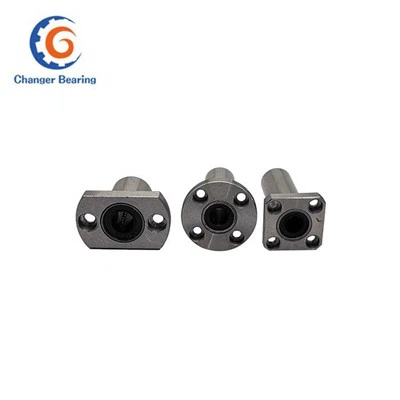
In conclusion, international standards for roller bearings are essential for ensuring the quality, performance, and reliability of these critical components. As a roller bearing supplier, we are committed to complying with all relevant international standards to meet the needs of our customers and provide them with high-quality products. By adhering to these standards, we have been able to build a strong reputation in the market, expand our market reach, and improve our business performance.
Housing If you are in the market for high-quality roller bearings that meet international standards, we would be happy to discuss your requirements with you. Our team of experts can provide you with technical support and assistance to help you select the appropriate roller bearings for your applications. Contact us today to start a conversation about your roller bearing needs.
References
- International Organization for Standardization (ISO). (2011). ISO 15:2011 Geometrical product specifications (GPS) — Dimensions and geometrical tolerances for rolling bearings.
- International Organization for Standardization (ISO). (2007). ISO 281:2007 Rolling bearings — Dynamic load ratings and rating life.
- International Organization for Standardization (ISO). (2003). ISO 15312:2003 Cylindrical roller bearings — Dimensions and tolerances.
- International Organization for Standardization (ISO). (2003). ISO 15313:2003 Tapered roller bearings — Dimensions and tolerances.
- International Organization for Standardization (ISO). (2003). ISO 15314:2003 Spherical roller bearings — Dimensions and tolerances.
- American National Standards Institute (ANSI). (2017). ANSI/ABMA 19.1-2017 Ball and Roller Bearings — Dimensions and Performance Standards.
- American National Standards Institute (ANSI). (2017). ANSI/SAE J2079:2017 Rolling Bearings for Automotive Applications.
- American National Standards Institute (ANSI). (2016). ANSI/ASME B32.100:2016 Aerospace Bearings.
Hangzhou Changer Bearing Co., Ltd
As one of the leading roller bearing manufacturers in China, we warmly welcome you to buy or wholesale cheap roller bearing in stock here and get pricelist from our factory. All customized products are with high quality and competitive price.
Address: Room 507, Building 9, Xixi Bafangcheng, Wuchang Street, Yuhang District, Hangzhou, Zhejiang, 311114 China
E-mail: info@remotioner.com
WebSite: https://www.remotioner.com/
