If you’ve ever held a lithium-ion battery in your hand—whether it’s powering your phone, your laptop, or the electric bike you commute on—chances are good you’ve held graphite too. As a negative electrode material supplier who’s spent the last 12 years talking to battery engineers, R&D teams, and even hobbyists tinkering with new cell designs, I’ve lost count of how many times someone has asked me: “Graphite is graphite, right? Why does my supplier’s material perform so differently than this other one I tested?” The answer, 9 times out of 10, comes down to crystallinity. It’s not a flashy topic, not like new 3D electrode designs or silicon nanowires that hit tech headlines every month, but it’s one of the most foundational factors that makes or breaks a negative electrode’s real-world performance. Negative Electrode Material Graphite
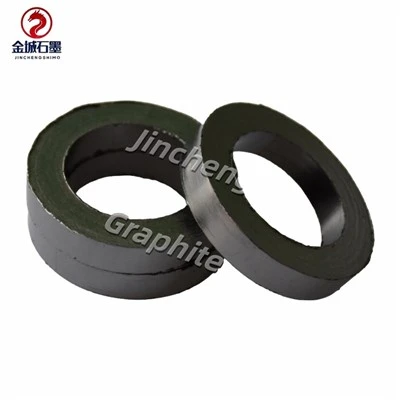
Let’s start with the basics, stripped of the jargon that fills too many material science papers. Graphite is made of stacked layers of carbon atoms, arranged in a hexagonal lattice. Think of a deck of cards, each card is a graphene layer, and the pile is your graphite particle. The “crystallinity” of that graphite isn’t just how big the individual crystal stacks are (though size matters) or how perfectly the layers align—it’s a measure of how uniform that lattice is, how few defects are scattered across the layers, and how consistently those stacks fit together. Low-crystallinity graphite has wonky layers, missing atoms, gaps where layers should line up, like a deck of cards where half the suits are misprinted and some cards are torn. High-crystallinity graphite has near-perfect hexagonal lattices, layers that stack smoothly and evenly, almost no missing or misaligned atoms.
Early in my career, I made the mistake of glossing over crystallinity with a customer who was designing a battery for a mid-range electric scooter. They were working on a tight budget, so they sourced a low-crystallinity graphite because it was 15% cheaper per ton. A month later, they were on the phone in a panic: their scooter batteries were dying 20% faster than projected, and after 300 charge cycles, their capacity had dropped by 25%. When we tested the material, we found that the low crystallinity was causing two big problems that no one had anticipated. First, the misaligned layers had all kinds of extra surface area—areas where lithium ions could get stuck, or react with the electrolyte to form a thick, unstable layer called the solid-electrolyte interphase (SEI). SEI is a good thing, it protects the electrode from degradation, but too much SEI formation siphons off lithium ions that should be powering the battery. Second, the defects in the graphite lattice meant the layers shifted and cracked as the lithium ions (which are tiny, like bullets fitting into the gaps between the cards) moved in and out during charging and discharging. Over time, those cracks split the graphite particles, creating more surface area, more SEI, and more lost capacity. That customer ended up switching to our medium-crystallinity material, and within three months, their scooter battery’s cycle life matched their design targets.
Let’s break down exactly how crystallinity impacts the three metrics that matter most for a negative electrode: capacity, cycle life, and rate performance. Capacity is how much energy a battery can store, right? For graphite, the theoretical maximum capacity is 372 mAh/g—that’s the number you see in every textbook. But that’s only for perfect, high-crystallinity graphite, where every gap between the graphene layers is uniform enough to hold lithium ions without wasting space. Low-crystallinity graphite has a lot of what we call “dead volume”: gaps between misaligned layers that can’t be accessed by lithium ions, because the gaps are the wrong size or blocked by defects. Those gaps also cause extra irreversible capacity loss, the lithium that gets trapped forming SEI or stuck in defects, which means your usable capacity drops. I’ve tested low-crystallinity samples that only hit 320 mAh/g, even though their producers advertised them as “high-capacity” materials. When you’re packing as much energy as possible into a small battery pack—like in a smartphone where every milliliter matters—that gap between theoretical and real capacity is a dealbreaker.
Cycle life is how many charge-discharge cycles a battery can go through before it loses enough capacity to be useless. This is where crystallinity really shines (or, I should say, where lack of it falls apart). When a lithium ion enters a graphite particle, it causes the graphite to expand by roughly 10% in the direction of the layers. Perfectly crystalline graphite layers are strong and flexible enough to handle that expansion without cracking. Low-crystallinity graphite has weak, misaligned layers that can’t stretch evenly. Each charge cycle causes small cracks to form, and over hundreds of cycles, those cracks split the particle into tiny fragments. Those fragments have even more surface area, which means more SEI formation, more trapped lithium, and more capacity loss. We’ve tracked samples of high-crystallinity natural graphite that retain 90% of their capacity after 1,000 cycles, while a low-crystallinity synthetic graphite from another supplier lost that same amount of capacity after just 400 cycles. For applications like EVs, where the battery needs to last 10+ years, this difference isn’t trivial—it’s a difference between a car that holds its value and one that needs a $10,000 battery replacement halfway through its life.
Rate performance is how fast a battery can charge and discharge. Think about that same electric scooter: if you can only charge it slowly, you’re stuck waiting an hour every day, but if you can charge it in 15 minutes, it’s a game-changer. Crystallinity impacts rate performance because of how easily lithium ions can move through the graphite lattice. High-crystallinity graphite has uniform, straight gaps between layers called the “interlayer spacing.” Lithium ions can slide through those gaps quickly, no detours, no getting stuck on defects. Low-crystallinity graphite has uneven spacing, twisted layers, and defects that act like roadblocks for lithium ions. When you try to charge fast, the ions pile up on the surface of the graphite particle instead of moving into the interior. That leads to something called lithium plating—metallic lithium forming on the surface, which can cause short circuits, reduce capacity, and even create safety risks. We’ve had a customer working on a fast-charging battery for delivery vans test three different graphite materials: low crystallinity could only charge to 80% in 2 hours, medium crystallinity could do it in 45 minutes, and our high-crystallinity synthetic graphite hit 80% in just 18 minutes. For delivery companies, that’s not just convenient—it means their vans spend less time charging and more time making drops, which directly impacts their bottom line.
Now, it’s not all black and white, which is why I don’t push all my customers to buy the highest-crystallinity graphite I have. The best choice depends on their application, and that’s something I spend a lot of time walking through with every new client. High-crystallinity graphite is amazing for long cycle life and rate performance, but it’s also more expensive. For a low-power, low-cost application like a kids’ toy, where cycle life only needs to be a few dozen charges, low-crystallinity graphite works perfectly. It’s cheaper, and the short cycle life isn’t a problem. But for a power tool that gets charged hundreds of times a year, or an EV battery that needs to last a decade, the extra cost of high-crystallinity graphite pays for itself in longer battery life, better performance, and lower total cost of ownership.
Synthetic vs. natural graphite is another layer that ties into crystallinity, and it’s a conversation I have regularly. Natural graphite comes from mines, and when it’s highly purified and processed, it has very high crystallinity—often higher than synthetic graphite made from coal or pitch. But natural graphite is more prone to expansion during charging, because its particle structure is made up of larger, more brittle crystals. Synthetic graphite can be engineered to have tailored crystallinity, so you can adjust it for a specific application: medium crystallinity for power tools, high crystallinity for fast-charging EVs, and so on. That’s why I offer both natural and synthetic graphite grades, each with precise crystallinity levels tailored to different use cases. A lot of suppliers will push you toward one or the other, but the best material is the one that matches your needs, not the one with the highest crystallinity on the market.
I want to address one common myth I hear all the time: that crystallinity is just a lab measurement, something that doesn’t matter in real-world use. A few years ago, a customer from a consumer electronics brand brought me a batch of graphite from a new supplier, claiming it was “100% crystalline” and “higher quality than anyone else’s.” We tested it, and sure enough, its X-ray diffraction (XRD) scan— the standard test for measuring crystallinity—showed a very high peak, indicating high crystallinity. But when we ran cell tests, it had terrible cycle life, and the rate performance was worse than our medium-crystallinity material. We dug into it, and found that while the bulk of the graphite particles had high crystallinity, the surface of the particles was amorphous—meaning it had almost no ordered lattice at all. When lithium ions hit the particle, they had to pass through that amorphous surface layer first, which caused a ton of SEI formation and trapped ions. The supplier had only tested the bulk crystallinity, not the surface, which is the part that actually interacts with lithium ions and electrolytes. That’s a key point for anyone choosing a negative electrode material: crystallinity isn’t just a bulk property—it matters at the surface, too. We’ve invested heavily in surface modification technology that preserves the bulk crystallinity our customers need, while adjusting the surface to create a stable SEI layer that doesn’t cause extra capacity loss. That’s one of the reasons our customers keep coming back, instead of chasing flashy “higher crystallinity” products that don’t deliver on their promises.
Another real-world example that sticks with me is a startup that was working on a small, lightweight battery for medical wearables—think a continuous glucose monitor or a heart monitor that patients wear 24/7. Their biggest challenge was size: the battery had to be tiny, but it also had to last for 5 years without needing a replacement. They tested low-crystallinity graphite because it was cheaper, but their batteries only lasted 18 months, and the capacity dropped so much that the device couldn’t track readings accurately. When they switched to our medium-crystallinity natural graphite, their battery hit 5 years of cycle life, and the surface modification we added kept the SEI stable so they didn’t lose capacity early. They went from a prototype that was too big and short-lived to a product that got FDA approval and is now used by over 100,000 patients. That’s the impact crystallinity has, when you get it right: it’s not just about numbers on a spec sheet, it’s about people being able to use life-saving devices without worrying about battery life.
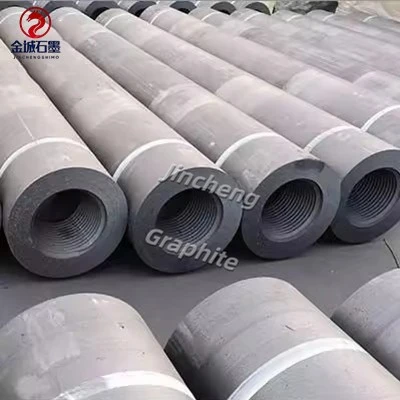
At the end of the day, choosing the right negative electrode graphite isn’t just about picking a material—it’s about understanding how crystallinity impacts your specific application’s needs. Too many companies treat graphite as a commodity, a generic material that all suppliers can provide equally. But after 12 years in this business, I know that the small differences in crystallinity, and how it’s engineered for both bulk and surface properties, can make or break a product’s performance, cost, and reliability.
Graphite Rod If you’re designing a new battery, troubleshooting underperforming cells, or looking to upgrade your current negative electrode material, I’m here to help. We can run custom tests on your current materials, walk through the tradeoffs between crystallinity levels for your specific use case, and provide samples tailored to your exact performance targets. We don’t sell one-size-fits-all graphite, because we know that every battery needs something different. Let’s talk about how crystallinity can take your negative electrode performance to the next level.
References
- Dahn, J. R., et al. (1995). "Factors limiting the performance of graphite negative electrodes for lithium-ion batteries." Carbon, vol. 33, no. 10, pp. 1281-1287.
- Zhang, S. S. (2006). "The solid electrolyte interphase (SEI) in lithium-ion batteries." Journal of Power Sources, vol. 162, no. 2, pp. 1379-1394.
- Liu, Y., et al. (2019). "Crystallinity effects on graphite anodes for fast-charging lithium-ion batteries." Journal of the Electrochemical Society, vol. 166, no. 15, pp. A3419-A3427.
- Scrosati, B., Garche, J. (2010). "Lithium batteries: Status, prospects and future." Journal of Power Sources, vol. 195, no. 9, pp. 2419-2430.
- Wang, C., et al. (2021). "Bulk and surface crystallinity of graphite: Impacts on lithium-ion battery performance." Carbon Energy, vol. 3, no. 4, pp. 567-582.
Huixian Jincheng Abrasive Mold Factory
As one of the most professional negative electrode material graphite manufacturers and suppliers in China, we have world-leading production equipment and strong manufacturing capabilities. Please rest assured to buy durable negative electrode material graphite for sale here from our factory. Quality products and reasonable price are available.
Address: Mengzhuang Town, Huixian City, Henan Province
E-mail: graphite.jc@gmail.com
WebSite: https://www.graphite-jc.com/
