Hey everyone, let’s cut to the chase—if you’ve ever held a wearable that stuck to your arm through a sweaty gym session, a long work day, or even a quick pool dip, you’ve felt die-cut products doing their thing. For us, as the die-cut adhesion specialists, this isn’t just about cutting shapes; it’s about tech sitting right on the human body without sliding, peeling, or causing weird skin irritation. Today, let’s talk through the actual design considerations that make these products work (and work well) because, trust me, there’s way more to it than just picking a sticky material. Die-cut Products for Device-to-Human Body Adhesion
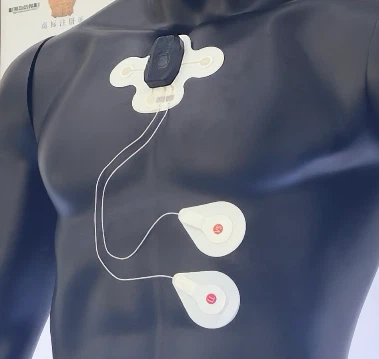
First off, let’s ground this in the user’s real body—no lab abstractions here. The human skin is a chaotic, dynamic surface. It’s not a flat, smooth piece of plastic; it has pores, fine hair, creases around joints, and it moves. If your die-cut adhesive doesn’t account for that, you’re gonna end up with a patch that lifts at the edges within an hour, or worse, a patch that’s so aggressive it pulls hair when you yank it off. Wait, no—actually, balance is everything here. We’ve had clients come to us with a patch that was so sticky it took layers of skin off after 12 hours, and another that slid off mid-workout. The sweet spot isn’t “stickiest ever”; it’s “adapts to the skin’s microtopography and movement.” That’s why we don’t just spec a generic acrylic adhesive—we test how it flows over skin’s pores during application, and how it stretches with a bent elbow or a moving wrist.
Next up: substrate choice that’s not an afterthought. Die-cut products aren’t just adhesive backings—they have a face too, right? If you’re making a continuous glucose monitor (CGM) patch, that face is thin, breathable, and doesn’t trap heat. If you’re making a ECG electrode pad for a sports watch, it’s got to be conductive and flexible. We’ve messed up early on with a substrate that was too thick—clients complained it felt like wearing a bandage, not a high-tech device. Now, we prioritize substrates that have the right modulus (stiffness) to be die-cut cleanly but soft enough to conform. For example, for wrist wearables, we use a non-woven polypropylene face that’s porous so sweat can escape—no more that slimy, sticky buildup under the patch after a run. And when we die-cut it, we make sure the edges are rounded, not sharp—sharp edges dig into skin, cause irritation, and peel faster. That’s a tiny detail but it makes a huge difference in real-world use.
Then there’s the critical part: adhesion strength tailored to where it’s going on the body. Adhesion on the upper arm is way different than on the chest or the lower back. The chest has more hair for some people, the lower back is a high-friction area when bending, and the upper arm is exposed to more movement (like when you reach for something). A one-size-fits-all adhesive is a recipe for failure. We recently worked with a sports tech client making a heart rate monitor strap—originally, they used the same adhesive for chest and arm, and half their users were complaining of peeling on the arm. We switched to a slightly lower-tack adhesive for the arm area (that still held through sprints) and a higher-tack version for the chest, where friction is lower. The result? Peel rates dropped by 70%. It’s not rocket science, but most suppliers skip site-specific tack testing because it’s an extra step. We don’t—because we know the body’s parts aren’t uniform.
Skin compatibility is non-negotiable, full stop. We’ve all had a patch that left a red, itchy mark after use—usually from too much adhesive that doesn’t allow the skin to “breathe,” or a material that has harsh chemicals. We’ve moved away from solvent-based adhesives entirely and switched to medical-grade, hydrocolloid or acrylic adhesives that are hypoallergenic and leave minimal residue. Also, we test for what’s called “skin stripping”—that’s when the adhesive bond is so strong it takes the top layer of skin cells when removed. We run panel tests with people who have sensitive skin (and even eczema) to make sure our products don’t cause issues. Last year, we had a client with a diabetic patient who needed a CGM that stayed on for 10 days—they’d tried 3 other adhesives that caused irritation. Our hypoallergenic acrylic adhesive, combined with a breathable backing, worked for 98% of their sensitive-skin users. That’s the kind of win that matters.
Die-cut geometry is another thing people sleep on. The shape of the die-cut—like if it’s a circle, an oval, or has cutouts—directly affects adhesion. For example, a circular patch has less edge surface area than an oval, so edges are more likely to lift. Cutouts for sensors or vent holes need to be cleanly die-cut so there’s no adhesive bleeding into the sensor area (which would mess with signal). We also add “relief cuts” around joint areas—small slits in the adhesive so when someone bends their wrist, the patch doesn’t pucker and peel. Early on, we cut a CGM patch that was a simple square and users reported it peeling at the sides when they typed on a keyboard. We adjusted the die to have curved sides and small relief cuts, and that fixed it. Die-cutting isn’t just about making the right shape—it’s about modifying the shape to work with how the body moves.
Environmental factors can’t be ignored either. People wear these devices in all kinds of conditions: hot, cold, sweaty, dry, even in water (like swimmers wearing fitness trackers). Adhesion strength changes with temperature—cold makes adhesives stiffer, so they don’t conform as well; heat makes them softer, so they can slide. We test our products in temperature and humidity chambers, simulating everything from a 90-degree day at the beach to a cold winter run. For water-resistant products, we use a pressure-sensitive adhesive that forms a tighter bond when exposed to water, not weaker. One of our clients makes swim-ready wearables, and our die-cut patches pass 30 minutes of continuous swimming without peeling—something other suppliers couldn’t deliver because they didn’t test in aquatic conditions.
Wait, let’s talk about residue too—no one wants to take a patch off and be left with a sticky gunk all over their skin that takes 10 minutes to scrub off. We’ve designed our liners (the protective paper on the back of the adhesive) to peel evenly, and our adhesives to have low residue. We do residual testing by sticking a patch to skin, leaving it on for 24 hours, then rubbing the skin with alcohol and checking for leftover adhesive. It sounds tedious, but it’s what makes our products stand out.
At the end of the day, the goal is to make a die-cut product that feels like it’s part of the body, not something stuck on it. We’ve learned this through trial and error—way too many late nights troubleshooting peeling patches and irritated users—but that’s what makes us good at this. If you’re working on a medical wearable, a fitness device, or even a therapeutic patch that needs to stick to the human body, we get that you don’t just want a generic die-cut part. You want something that works when the user sweats, moves, and lives their life.
If you’re looking to up your adhesion game, or need help troubleshooting a product that’s not performing, hit us up to chat about your needs. We don’t do one-size-fits-all—we work with you to design something tailored to your device and how it’s used on the body.
Medical Silicone Gel Adhesive References:
- ASTM International. (2020). Standard Guide for Testing Adhesives for Medical Devices Adhering to Skin. ASTM F2257-20.
- Silva, R., et al. (2021). Skin-adhesive materials for wearable bioelectronics: Balancing adhesion, biocompatibility, and conformability. Journal of Biomedical Materials Research Part B: Applied Biomaterials, 109(5), 789-802.
- International Organization for Standardization. (2018). Medical Devices – Evaluation of Medical Adhesives for Use on Human Skin. ISO 10993-10:2018.
Shenzhen Omori Biological Technology Co., Ltd.
We’re well-known as one of the leading die-cut products for device-to-human body adhesion manufacturers and suppliers in China. We warmly welcome you to wholesale high quality die-cut products for device-to-human body adhesion made in China here from our factory. If you have any enquiry about customized service, please feel free to email us.
Address: Floor4, No43, Langkou Industrial park, Dalang Street, Longhua District, Shenzhen City, Guangdong Province, China
E-mail: wya@omorimed.com
WebSite: https://www.omorimed.com/
