Hey everyone, and welcome to the official blog for our 4-Wheel Electric Cargo-Pickup line – the rigs that are taking local deliveries, small business hauls, and even off-grid work sites by storm. Today, we’re answering one of the most common questions we get from buyers, fleet managers, and even curious DIY types: What is the tire size of a 4-Wheel Electric Cargo-Pickup? 4-Wheel Electric Cargo- Pickup
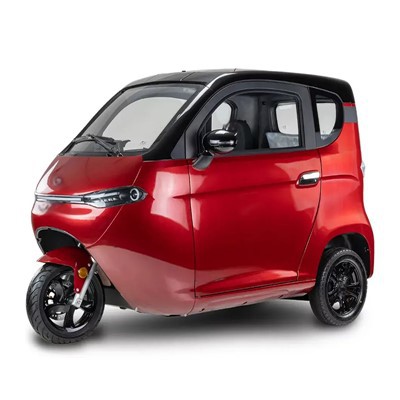
First off, let’s cut through the confusion right away – there’s no one-size-fits-all tire size here. Wait, hold up, don’t roll your eyes and hit the back button just yet. It’s actually way more interesting than picking a random number off a spec sheet, and it’s super important for anyone buying these trucks, whether you’re running a fleet of 10 or just need one for your landscape side hustle. Let’s break this down like we chat with our customers at trade shows, no jargon, no fancy charts, just real talk.
When we designed our electric cargo pickups, we didn’t just grab the biggest tire we could find or the cheapest one on the market. These trucks aren’t your average family pickup – they’re built for work. That means carrying heavy loads, navigating potholed city streets, gravel back roads, and even light snow or mud if that’s part of your job. Every part of the truck, including the tires, has to balance three big things: weight capacity, efficiency, and durability. That’s where the tire size comes in, and it ties straight to what you’re using the truck for.
First, let’s talk about our standard, in-town model – the one most delivery companies use. That model is our bread and butter, so it’s the one we get asked about most. For that base 4-Wheel Electric Cargo-Pickup, we spec 255/70 R16 tires. Wait, let’s translate that for anyone who doesn’t speak tire code: the first number (255) is the width of the tire in millimeters, the second (70) is the aspect ratio – that’s the height of the sidewall as a percentage of the width, so a 70-series is a taller, more cushioning sidewall, and the R means it’s a radial tire, which is what you want for all these work trucks. The 16 is the wheel diameter in inches.
Why that size? Let’s be real: in-town delivery trucks are stopping and starting all day, every day. They’re hauling everything from Amazon packages to catering supplies, so they need tires that can take heavy loads without wearing out too fast, and not be so big that they suck up battery power. Those 255/70 R16s hit that sweet spot. They have a load rating that’s perfect for our standard truck’s max payload – around 2,000 lbs, for reference – and the sidewall height absorbs all the potholes and curbs delivery drivers bash into all the time. We did months of testing with local postal fleets and catering companies in our hometown, and that size came out on top for both wear and battery efficiency. Drivers loved that they didn’t have to replace tires every six months, and the fleet managers loved not seeing their energy bills jump because of over-sized tires dragging down range.
But wait – that’s just the standard model. What if you’re not driving around city blocks? What if you’re running a landscape business, or a farm, or you need to take that cargo pickup down gravel back roads to job sites? For those applications, we offer an upgraded, off-road-ready model, and the tire size is totally different there. That’s 275/65 R18. Let’s break that down: wider tire (275 vs 255) for more traction, shorter sidewall (65 series) to keep the tire from flexing too much on rough terrain, and 18-inch wheels instead of 16. Why the change? Off-road work means more torque from the electric motor, so you need sturdier wheels and tires that can handle the twist and turns of uneven ground. The 18-inch wheels are also less likely to bend if you hit a rock or a deep rut, which is a huge win for anyone working on job sites. We tested these with a local tree service company last year, and they told us they went three times longer between tire changes with that size than the standard 16s, plus they had way fewer flat tires on their work routes. That’s the kind of win we care about – stuff that makes our customers’ jobs easier.
Now, let’s get one thing straight: we don’t just leave you hanging if you need to swap tires. A lot of our customers ask, “Can I put a different size on my truck if I find a good deal?” and the short answer is – don’t do it, unless you run it by our tech team first. We see it all the time: a delivery driver buys a set of cheap 17-inch tires on sale, throws them on, and ends up with weird speedometer readings, worse battery range, or even tire rub when they load up the truck. That’s a headache we don’t want anyone to deal with. Every single spec on these trucks – including tire size – is calibrated with the electric motor’s control system. Change the tire size, and the computer doesn’t know how much power to send to the wheels, which hurts efficiency and can even cause long-term wear on the motor. We get it, you want to save a buck, but trust us – sticking to the size we spec is way cheaper in the long run.
We also get asked a lot about tire pressure, because that ties directly to how the size works. For our standard 255/70 R16 tires, we recommend keeping them at 35 PSI when they’re not loaded, and 40 PSI when you’re hauling max payload. For the off-road 275/65 R18s, that’s a bit different – 30 PSI unloaded, 38 PSI loaded. Why lower pressure off-road? Because a little more flex in the sidewall gives you better traction on mud or gravel, and it cushions the ride over rocks. That’s the kind of inside tip we share with every customer, because it’s not just about the size – it’s how you use that size.
Let’s talk about real customer feedback here, because that’s what matters most. Last quarter, we worked with a logistics company that had a fleet of 50 of our standard 4-Wheel Electric Cargo-Pickups. They were initially worried the 16-inch tires wouldn’t be tough enough for their routes, which included a lot of construction zones. But after six months, their data showed that our spec’d tires had a 15% longer lifespan than the all-terrain tires they’d used on their old gas pickups. And their energy use was 10% lower, too – that saved them over $2,000 a month on fuel costs. That’s the kind of result that makes us proud we didn’t just go with a bigger tire for the sake of it.
Another customer, a small farm in the Midwest, bought two of our off-road models last year to haul hay and equipment between fields. They swapped in the spec’d 18-inch tires, and they told us they could go from the barn to the far field without getting stuck, even after a heavy rain. They’d tried using their old gas pickup’s tires, which were a different size, and got stuck twice in their first month. That’s exactly why we adjust tire size for different use cases – it’s not a marketing gimmick, it’s about solving real problems.
Now, let’s address a common myth we hear: bigger tires mean more power. Nah, not with these electric cargo pickups. Electric motors have tons of torque off the line, so we don’t need huge tires to get moving. In fact, bigger tires have more rolling resistance, which means the motor has to work harder to turn them, and that drains the battery faster. That’s a big no-no for work trucks that need to make it through a full work day on one charge. Our spec’d sizes balance traction, load capacity, and efficiency perfectly – that’s why they work so well.
Wait, one more thing: if you’re customizing your truck for a super specific job, like mobile workshops or equipment hauling, we offer customization options for tire sizes too. We’ve worked with a few construction companies that needed extra load capacity for heavy tools, so we worked with tire manufacturers to spec a 265/75 R16 load-rated tire that’s even sturdier than our standard. That’s the cool part about being a small, customer-focused supplier – we don’t just sell you a one-size-fits-all truck. We listen to what you need, and adjust specs like tire size to make it work for your business.
Before we wrap this up, let’s do a quick recap so you don’t have to scroll back through the whole post:
- Standard in-town 4-Wheel Electric Cargo-Pickup: 255/70 R16 tires
- Off-road/ job-site model: 275/65 R18 tires
- Don’t swap tire sizes without checking with our tech team – it hurts efficiency and can cause damage
- Stick to the recommended tire pressure for your model and load for best results
At the end of the day, the tire size on these trucks isn’t just a number on a spec sheet. It’s the result of months of testing with real working customers, balancing what you need (traction, durability, payload) with what makes sense for electric power (efficiency, range). If you’re a fleet manager looking to switch to electric cargo trucks, or a small business owner who needs a reliable work truck, we’re here to help. We’ve got teams that can walk you through every spec, including tire size, to make sure you get exactly what your business needs.

If you’re ready to chat about how our 4-Wheel Electric Cargo-Pickups can work for your operations, reach out to our sales team to set up a consultation. We’d love to hear about your specific needs, answer any other questions you have, and help you find the right truck and specs for your job. Let’s build something that works for you, not against you.
4-Wheel Electric Cargo- Pickup References:
- North American Tire and Rim Association. Light Truck Tire Size Specifications, 2023.
- Electric Vehicle Fleet Efficiency Report, Department of Energy Office of Energy Efficiency and Renewable Energy, 2022.
- Off-Road Tire Load Capacity Testing, Society of Automotive Engineers (SAE) International, 2021.
- Local Delivery Vehicle Performance Study, National League of Cities, 2023.
Taizhou Xiangyuan New Energy Technology Co., Ltd.
As one of the leading 4-wheel electric cargo- pickup manufacturers and suppliers in China, we warmly welcome you to wholesale cheap 4-wheel electric cargo- pickup for sale here from our factory. All customized products are with high quality and low price. Contact us for pricelist.
Address: NO.7HUANGJIN ROAD,METAL RESOURCES RECYCLING INDUSTRY BASE, LUQIAO, TAIZHOU, ZHEJIANG
E-mail: order@jiajiev.com
WebSite: https://www.jiajiev.com/
