If you’ve ever walked past a G Class W463 parked on the street, you know it’s impossible to miss—boxy, unapologetically rugged, and built like it could outlast a dozen lesser SUVs. As someone who’s been supplying these bad boys for almost 15 years now, I get tons of questions from buyers: “Is that the same G from 20 years ago?” “What’s actually changed over the years?” Let’s break this down, no stuffy jargon, just the real tea on the W463’s major updates. G Class W463
First, let’s set the scene: the W463 launched in 1990, right? Before that, there was the W460, super basic, built for military use mostly—think steel doors, no frills, just pure off-road grit. The W463 was Mercedes’ move to make that ruggedness road-legal and luxury-friendly, and it hit the market with that iconic box shape everyone loves. For the first few years, it was pretty much a “if it ain’t broke, don’t fix it” situation. Early 90s models had a 3.0L diesel or a 5.0L V8, solid axles front and rear, three locking differentials—those were the big ticket items. Nothing flashy, just enough to make it comfortable enough for weekend runs but tough enough to tackle a mountain trail.
The first major shakeup didn’t come till 2001. That’s when Mercedes basically reworked the entire interior and tech, and let’s be real, that’s when the W463 started feeling less like a work truck and more like a luxury SUV. Before 2001, the cabin was nice, but dated—basic radio, leather seats that were more functional than fancy, plastic that felt a little cheap. 2001 brought in the COMAND infotainment system, which was a game-changer back then, plus updates to the air suspension (wait, early W463s had coil springs on the rear, right? 2001 switched to full air suspension, way smoother on the highway). Also, the V8 got a power bump—from around 290 hp to 354 hp—and they added a 5-speed automatic transmission to replace the old 4-speed. That 4-speed was clunky, so the 5-speed made cruising way nicer. I remember around 2002, we started getting way more private buyers instead of just government and fleet orders—people were actually buying these as daily drivers now, not just toys.
Skip ahead to 2012, that’s another big one. Mercedes didn’t mess with the exterior shape—thank god, because the box is sacred—but everything under the skin got a refresh. The engine lineup got a full overhaul: they retired the old 5.0L V8 and put in the 5.5L twin-turbo V8, which cranked out 536 hp in the G 55 AMG model. That was insane for a boxy SUV back then—0 to 60 in like 5.5 seconds, which is super fast for something that weighs almost 5,000 pounds. Also, the transmission jumped to a 7-speed automatic, so fuel economy (still not great, but better than before) and shift smoothness got way better. Tech-wise, they updated COMAND to the NTG 4 system, which had GPS navigation, Bluetooth, and a backup camera—huge for people who weren’t used to driving a box with no rear visibility. They also tweaked the suspension a little, added electronic stability control that actually worked without killing the off-road capability, and fixed some of the old issues with the interior fit and finish. By this point, we were selling more W463s to celebrities and high-net-worth individuals than anything else—word got around that this wasn’t just a work truck, it was a status symbol that could still handle rough terrain.
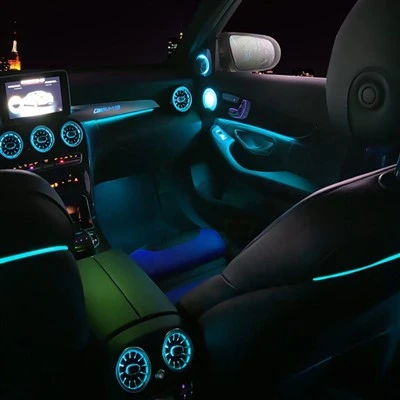
Then 2018 hit, and that’s the update that blew everyone’s minds. Wait, a lot of people call this the “new W463,” but it’s still part of the same line, right? The exterior is almost identical—they only changed small things like the LED headlights, the grille, and the fender flares, but the box is still there. The inside? Unrecognizable from the 2012 model. They put in that massive dual-screen setup—two 12.3-inch screens, one for the gauge cluster, one for infotainment—Android Auto and Apple CarPlay for the first time, which was non-negotiable by then. The engine got even more powerful: the G 63 AMG now has a 4.0L twin-turbo V8 with 577 hp, and the standard G 500 (or G 550 in some markets) has a detuned version of the same engine. They also changed the frame and body structure a little to make it stiffer—off-road capability is still there, but it’s way quieter on the highway, like, you can have a normal conversation at 70 mph now, no yelling over wind noise. I get why some purists side-eye this 2018 update, but let’s be real—Mercedes had to adapt, because no one was buying a 1990s interior in 2018. The boxy shape was the soul, and they kept that, so it still feels like a G, just with modern conveniences.
Wait, I can’t forget the little updates in between that make a huge difference for owners. Like, around 2007, they added a diesel particulate filter for the diesel models, which meant people could actually drive them in cities with strict emissions rules—before that, a lot of cities banned the old diesels, so that opened up a whole new market. And in 2015, they fixed the old issue with the door handles that would stick in cold weather—super annoying for anyone in a place like Canada or the Northeast US, so that was a nice quality of life update.
A lot of people ask me, “Should I buy an old W463 or a new one?” And my answer is always, depends on what you want. If you love the raw, unfiltered off-road feel, a pre-2001 model is great, as long as you don’t mind the basic interior and clunky transmission. If you want something you can drive every day, the 2012 to 2017 models hit that sweet spot—they still have that classic vibe, but with tech that’s usable, not overwhelming. The 2018+ models are perfect if you want all the modern bells and whistles, and you don’t care too much about the purist side.
As someone who’s been in this game for years, I’ve seen firsthand how the W463 has evolved, but the core—those three locking differentials, that solid axle, that unmistakeable shape—has never changed. That’s why people still go crazy for these things, right? No other SUV has that same combination of luxury and toughness.
If you’re in the market for a W463, whether it’s a classic, a mid-range model, or the latest 2024 version (they still tweak the smaller things, like infotainment updates and driver assist tech), hit us up. We’ve got a huge inventory, we’ve worked on these things for years so we know every quirk, and we can help you find the exact model that fits what you need—whether that’s a weekend off-road toy or a daily driver that turns heads every time you pull up.
S Class Ambient Light References:
Mercedes-Benz. (1990). G-Class W463 Launch Documentation. Mercedes-Benz USA.
Mercedes-Benz. (2001). W463 Model Year 2001 Technical Update. Mercedes-Benz Global Media.
Mercedes-Benz. (2012). W463 Model Year 2012: Powertrain and Chassis Revisions. Mercedes-Benz AMG Media.
Mercedes-Benz. (2018). New G-Class (W463) Official Debut Specifications. Mercedes-Benz Global Press Release.
Guangzhou Yuka Technology Co., Ltd.
As one of the most professional g class w463 manufacturers in China, we’re featured by quality products and good price. We warmly welcome you to buy advanced g class w463 made in China here from our factory. If you have any enquiry about quotation, please feel free to email us.
Address: 2nd Floor, No.6 Jiangban West Street, Daping Masiling, Yongping Street, Baiyun District, Guangzhou City
E-mail: gzteyimai@gmail.com
WebSite: https://www.gzyuka.com/
