If you’ve ever stood next to a large industrial pump, a wind turbine nacelle during operation, or a marine propulsion engine running at full tilt, you’ve likely felt the low, steady hum of fluid film thrust bearings at work. As a supplier of these components, I talk to plant managers, design engineers, and maintenance technicians every week, and one question comes up more than any other: “Why do these parts matter so much for my machine’s efficiency?” The answer isn’t just about keeping equipment from breaking—though that’s critical. It’s about how a well-matched fluid film thrust bearing turns friction from a destructive force into a barely measurable factor, cutting energy waste, extending component life, and boosting overall machine performance in ways many teams don’t see until they upgrade. Fluid Film Thrust Bearings
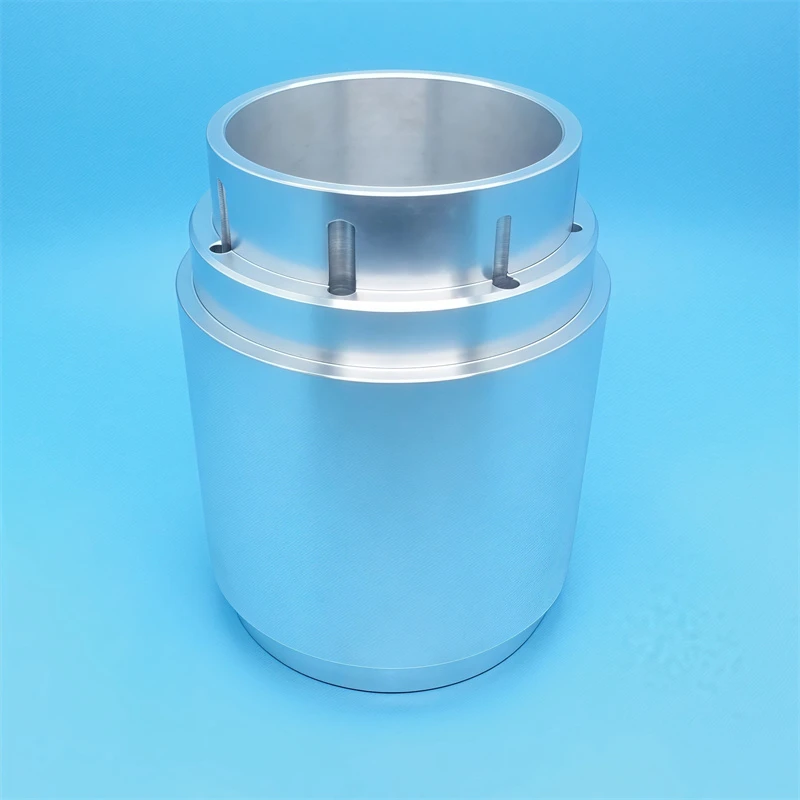
First, let’s ground this in the basics, because too many people still mix up fluid film thrust bearings with old-style rolling element bearings. Rolling element bearings use tiny balls or rollers to carry load between moving surfaces, and even with high-quality lubrication, those metal parts make direct contact as they rotate. That contact generates friction—heat, which saps energy, and wear, which requires frequent repairs. Fluid film thrust bearings? They separate two surfaces with a continuous, pressurized layer of lubricant, usually oil, air, or sometimes water for specialized applications. The thrust bearing’s job is to handle axial loads—the forces that push a machine’s parts along its rotational axis, like the downward force from a wind turbine’s rotor or the thrust from a marine propeller. When designed and installed correctly, that oil layer is just a few microns thick—thinner than a human hair—so there’s zero metal-to-metal contact during normal operation. That’s the core of their efficiency advantage, but how does that translate to real machine efficiency?
Let’s break it down by energy loss, which is where the biggest gains happen. For any rotating machine, friction accounts for 20-30% of total energy consumption, according to data from the American Society of Mechanical Engineers (ASME). Half of that friction usually comes from thrust loads, because axial forces are often unbalanced as machines operate. Take a large industrial centrifugal pump, for example, which powers everything from water treatment plants to oil refineries. A pump’s impeller creates axial thrust as it pushes fluid, and if that thrust isn’t properly managed, the shaft will shift, causing friction in the bearing. Switching from a rolling element thrust bearing to a properly sized fluid film thrust bearing here can cut friction-related energy loss by 50-70% for that bearing alone. Over the course of a year, that adds up to tens of thousands of dollars in saved energy for a single pump, not to mention less strain on the entire drive train—including the motor, gearbox, and coupling—which means those parts also run more efficiently.
I saw this firsthand last year with a municipal water treatment plant that was struggling to meet energy cost targets. Their six 500-horsepower centrifugal pumps were using rolling element thrust bearings, and their maintenance team was spending 40 hours a week repairing bearing-related failures, not to mention the $120,000 a year in energy bills for those pumps. We worked with their engineering team to replace the old bearings with our custom fluid film thrust bearings, sized specifically for each pump’s exact axial load and operating speed. Three months later, their energy use for those pumps dropped by 22%, and bearing-related maintenance fell to less than 5 hours a month. That’s not a fluke—it’s the consistent result of fluid film bearings’ low friction design. The lubricant layer does more than separate surfaces too; it acts as a coolant, dissipating heat that would otherwise build up in the bearing and cause the motor to work harder to compensate for overheating. For high-speed machines, like wind turbine generators, that heat management is a huge part of efficiency. A standard wind turbine generator has a rotational speed of 10-20 RPM for the low-speed shaft, which translates to thousands of RPM for the high-speed shaft connected to the generator. The thrust bearing on that high-speed shaft has to handle heavy axial loads, and any friction here would directly reduce the amount of energy the turbine can feed into the grid. A 2022 study in the Journal of Turbomachinery found that upgrading a 2.5 MW wind turbine from a rolling element thrust bearing to a fluid film thrust bearing increased annual energy output by an average of 3.8%. For a wind farm with 50 turbines, that’s an extra 18,000 MWh of energy per year—enough to power 1,600 average U.S. homes. That’s a tangible, real-world impact that doesn’t come from tweaking a motor or adjusting a control system; it comes from a simple bearing upgrade.
But efficiency isn’t just about energy savings. It’s also about uptime, which is a huge part of overall machine efficiency, especially for continuous-operation equipment like marine engines, power generators, or mining conveyors. If a machine goes down for 24 hours, that’s lost production, missed deadlines, and expensive emergency repairs. Fluid film thrust bearings have a longer operational life than rolling element bearings when sized and maintained properly, which reduces unplanned downtime and keeps machines running at peak efficiency for longer. Rolling element bearings have a finite life, usually measured in operating hours, after which the balls or rollers start to wear, leading to increased friction and higher energy use. Fluid film bearings, on the other hand, only wear if the lubricant layer fails, and modern designs have built-in monitoring systems that alert operators to pressure or temperature changes before that happens. For a marine engine that operates 24/7 on cross-ocean voyages, that reliability is non-negotiable. A client of ours in the shipping industry recently upgraded their cargo ships’ thrust bearings from rolling element to fluid film, and they reported a 30% reduction in unplanned engine shutdowns over 18 months. Even when bearing replacement is needed, fluid film thrust bearings are often easier to maintain—many can be serviced on-site without fully disassembling the entire drive train, which cuts maintenance time by up to 60% compared to rolling element bearing swaps.
That said, fluid film thrust bearings aren’t a one-size-fits-all solution, and that’s where a good supplier makes all the difference. I’ve seen too many teams buy generic fluid film bearings, size them incorrectly for their specific load or operating conditions, and end up with worse efficiency than the old bearings. For example, if a bearing isn’t pressurized enough, the lubricant layer breaks down, causing metal contact and friction. If it’s over-pressurized, you’re wasting energy pumping lubricant unnecessarily. The key is matching the bearing’s design—whether it’s hydrodynamic (uses the shaft’s rotation to pull lubricant into the gap), hydrostatic (uses external pressure to maintain the lubricant layer even at low speeds), or a hybrid— to the machine’s operating profile. Hydrostatic bearings are ideal for machines that start and stop frequently, like large industrial presses, because they maintain a full lubricant layer even when the shaft isn’t moving. Hydrodynamic bearings work best for constant-speed machines, like wind turbines or large pumps, where the shaft’s rotation builds enough pressure to support the load.
Another common misconception is that fluid film thrust bearings are too expensive upfront. While the initial cost might be 20-30% higher than a standard rolling element bearing, the return on investment usually comes in less than two years, and often as little as six months, thanks to energy savings and reduced maintenance. For example, a mining client we worked with had a large slurry pump that used a rolling element thrust bearing, costing $8,000 upfront. We supplied a custom hydrostatic fluid film thrust bearing for $10,500, but their energy savings from reduced friction and less downtime added up to $18,000 in the first year. By year three, their total savings were over $45,000, and they still had a bearing in perfect working order. That’s a clear ROI that’s hard to ignore for teams focused on their bottom line.
It’s also important to talk about environmental efficiency, which is becoming more and more important for industrial operations. The energy saved by using lower-friction bearings means less fuel burned for engines, less electricity used for motors, and fewer greenhouse gas emissions. The same wind turbine study I mentioned earlier found that the 3.8% increase in energy output from fluid film bearings reduced each turbine’s annual CO2 emissions by approximately 12 tons, which is equivalent to taking 2.6 cars off the road for a year. For manufacturing plants that have sustainability targets to meet, upgrading to high-efficiency fluid film thrust bearings is a low-cost, high-impact way to hit those goals without major overhauls to their production processes.
Now, I know some teams are hesitant to switch, especially if they’ve been using rolling element bearings for decades. That’s why we work closely with customers to audit their current equipment, run load calculations, and provide custom solutions that fit their budget and operational needs. We also offer on-site testing for new installations, to make sure the bearing is performing as expected, and ongoing support for maintenance and monitoring. The biggest mistake I see is waiting until a bearing fails to upgrade. By then, you’re already losing energy and dealing with expensive downtime. Proactive upgrades, especially during scheduled maintenance shutdowns, can make a huge difference in efficiency without disrupting operations.
At the end of the day, a machine’s overall efficiency is only as good as its weakest component. Too often, teams focus on upgrading motors or control systems, but the bearings that handle axial loads are a critical part of the puzzle. Fluid film thrust bearings don’t just reduce friction—they extend machine life, cut energy costs, reduce downtime, and help operations meet sustainability goals. For any business that relies on continuous, efficient machine operation, these components aren’t just parts—they’re an investment in long-term performance.
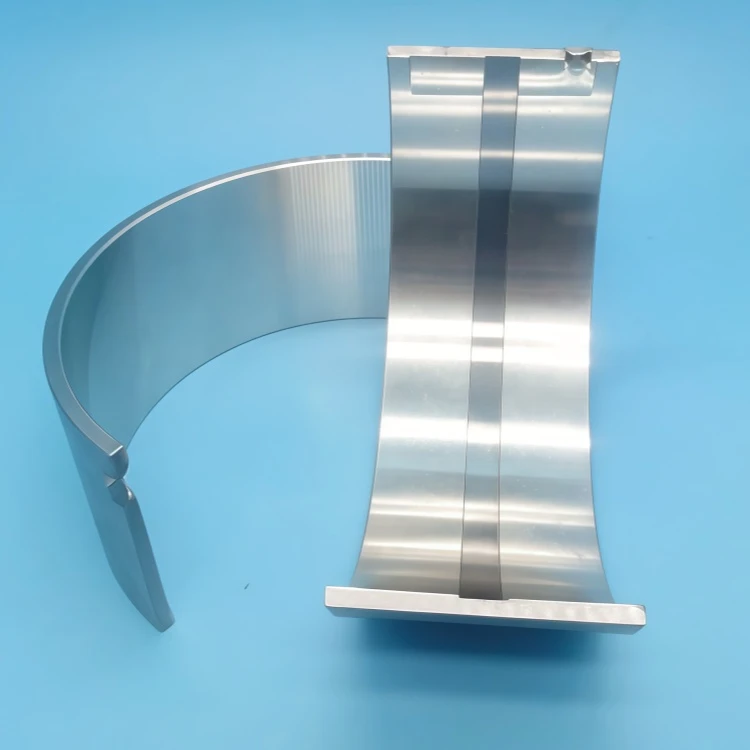
If you’re looking to improve your machine’s efficiency, reduce energy costs, or cut down on unplanned downtime, we’d be happy to discuss how a custom fluid film thrust bearing solution can work for your application. Whether you’re working with pumps, wind turbines, marine engines, or industrial machinery, we have the expertise to design and supply a bearing that fits your exact needs. Reach out to our team to learn more and start a conversation about your project.
Fluid Film Bearings References
- American Society of Mechanical Engineers (ASME). (2021). Friction and Energy Loss in Rotating Machinery: A Global Industry Report. ASME Press.
- Journal of Turbomachinery. (2022). Efficiency Improvements in Utility-Scale Wind Turbines via Advanced Thrust Bearing Technology. Vol. 144, No. 8.
- Marine Engineering and Technology. (2023). Reliability Impacts of Fluid Film Bearings on Commercial Cargo Vessel Operations. Vol. 68, No. 3.
- International Energy Agency (IEA). (2022). Energy Efficiency in Industrial Rotating Equipment: Best Practices for Bearing Selection. IEA Publishing.
- Lubrication Engineering. (2021). Hydrostatic vs. Hydrodynamic Thrust Bearings: Load and Speed Matching for Industrial Applications. Vol. 77, No. 5.
Wenzhou Zhengbang Bearing Co., Ltd.
We are one of the most professional fluid film thrust bearings manufacturers and suppliers in China. With abundant experience, we warmly welcome you to buy customized fluid film thrust bearings at competitive price from our factory. If you have any enquiry about free sample, please feel free to email us.
Address: Units 1-1 and 3-1, Building 12, Yongxing Nanyuan Small and Micro Enterprise Startup Park, Binhai 2nd Road, Yongxing Subdistrict, Longwan District, Wenzhou City, Zhejiang Province.
E-mail: zbbearing@zbbearing.com
WebSite: https://www.zb-bearings.com/
