If you’re a commercial soft play supplier, you know picking the right location for a new soft play business can make or break how much traffic you get—and how long that traffic sticks around. I’ve been working in this game for over a decade, installing soft play setups for everything from standalone centers to cafes and community hubs, and I’ve seen first-hand which spots crush it, and which ones end up gathering more dust than kids. Let’s break down the best locations, why they work, and what to watch out for when you’re scouting. Commercial Soft Play
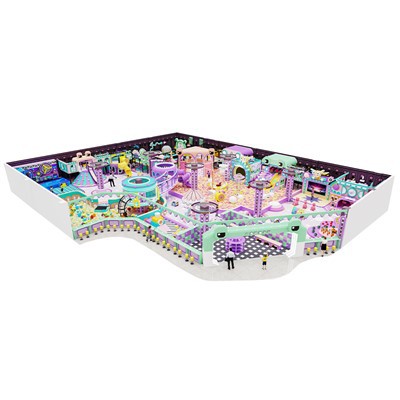
First up, standalone family entertainment centers (FECs) in mid-sized suburban areas. Wait, let me clarify—this isn’t a tiny town of 5,000 people with only one elementary school. We’re talking suburbs within a 20-mile radius of 50,000 to 150,000 households, mostly with young families (think 25 to 40-year-olds with 1-2 kids under 10). Why? Suburbs are where most families outgrow backyard play sets but don’t want to trek 45 minutes to a city indoor playground or a zoo. Last year, we installed a 1,200 sq ft soft play structure in a suburb outside Columbus, Ohio, that’s already hitting 80% occupancy on weekends because it’s the only dedicated play spot for 30,000 nearby families. Pro tip: Avoid areas with too many existing competitors—if there are two other soft play centers within 10 miles, you’ll split the customer base too thin. I once tried a location in Denver where three FECs were within 15 miles, and the center we set up there only did 40% of the projected revenue. That’s not a soft play problem, that’s a location problem.
Second spot: cafes with a family focus, especially “play cafes” or coffee shops targeting parents with young kids. Wait, not just any regular coffee shop. We’ve had the most success with small to mid-sized cafes (1,500 to 2,500 sq ft total) that already have a loyal local parent customer base. Why? Parents hate paying for a separate play center just to let their kid run around—they want to grab a latte, a bite, and let their kid play while they chat or work. Last year, we teamed up with a cute little cafe in Portland, Oregon, that did $4,000 a month in soft play revenue alone in the first six months, on top of their regular coffee sales. The key here is that the cafe’s existing foot traffic is your foot traffic—you don’t have to spend a ton on marketing to get people through the door. Just make sure the cafe is in a spot with easy parking, and that it’s not a quiet downtown spot where parents are too busy to bring their kids. I learned that the hard way: we installed a soft play structure in a downtown Seattle coffee shop a few years back, and it flopped because there was no parking, and most customers were office workers who couldn’t bring their kids during the day.
Third: community centers and rec centers, especially those with existing youth programs. Wait, not the big city rec centers that host high school sports—we’re talking about smaller, local rec centers in neighborhoods with lots of young families. Let’s take an example: a rec center in Austin, Texas, that runs after-school programs for 6-12 year olds and weekend family events. We installed a modular soft play setup there, and now it’s used for open play, birthday parties, and even youth fitness classes. The rec center already has built-in access to local families, so they don’t have to do much advertising—they just send out emails to their membership list, and people show up. Another plus: rec centers often have lower rent than standalone FECs, because they’re non-profit or government-run, so that cuts down on your overhead. The only catch? Make sure the rec center has enough space for the soft play, plus a separate area for parents to sit. If the only spot they have is a 500 sq ft corner of a gym, you’ll end up with a cramped setup that kids hate, and parents won’t stay.
Fourth: retail areas with a high concentration of family-friendly stores, like shopping centers with Target, Walmart, or specialty toy stores. Wait, not a fancy upscale mall where the stores are $500 handbag shops—we’re talking about strip malls or power centers that cater to everyday families. Let’s say a power center in Atlanta that has a grocery store, a kids’ clothing shop, and a movie theater. We installed a small soft play area there, and it works because parents are already out running errands or catching a movie, and they can drop their kid at the play spot for an hour while they shop. Last quarter, we had a client in Charlotte, North Carolina, who added a 800 sq ft soft play structure to their shopping center, and their rental revenue from the play spot was $2,500 a month within the first three months. The thing about retail locations is that foot traffic is consistent—especially on weekends, when families do most of their shopping. Just make sure the play spot is near the main entrance, not tucked in the back of the mall where no one can find it.
Now, let’s talk about the locations you should avoid, because even the best soft play setup can’t save a bad spot. First, areas with a median age over 40. If the average age of people in the area is 45 or higher, there are way fewer young families with kids under 10, so your customer base is tiny. I once did a project in a retirement community in Florida, and the soft play we installed there was only used by a few grandkids visiting—hardly enough to turn a profit. Second, locations with no dedicated parking. Parents won’t drive around for 20 minutes looking for a spot, especially if they have a stroller and a kid who’s already restless. We had a client in Chicago who tried a spot with street parking only, and their play center was half empty every weekend because people couldn’t park. Third, remote areas outside of a major city. If the spot is more than 25 minutes from any residential neighborhood, families won’t make the trip regularly—they’ll only come for birthday parties, which is a small portion of your revenue.
Wait, before I wrap up, let’s add a quick pro tip from someone who’s installed hundreds of these setups: always scout the location during peak hours. If you’re looking at a suburb, go there on a Saturday afternoon and count how many young families are out at the grocery store, the park, and local cafes. If you’re looking at a shopping center, count foot traffic between 1 pm and 5 pm on a weekend—those are the hours when parents will drop their kids at soft play. I once passed on a spot in Indianapolis because when I scouted it on a weekday, it looked busy, but on a Saturday, there were barely any families around. Turned out the area was mostly home to college students, not young families.

At the end of the day, the best locations for a commercial soft play business are the ones where there’s a consistent group of young parents with kids under 10, easy access and parking, and not too much competition. If you’re in the process of setting up a new soft play space, or you’re looking to upgrade your current setup, reach out to our team to chat through your location, your space, and what will work best for your community. We’ve got years of experience designing and installing soft play setups that fit exactly what different locations need, and we’re here to help you turn your play space into a go-to spot for families.
Ocean Soft Play References:
- International Association of Amusement Parks and Attractions (IAPA). (2023). Family Entertainment Center Location and Demographic Trends Report.
- Small Business Administration (SBA). (2022). Guide to Retail and Commercial Location Selection for Family-Focused Businesses.
- Soft Play Industry Association. (2024). Suburban Soft Play Center Performance Analysis.
Guangzhou Flyfun Amusement Equipment Co., Ltd.
Guangzhou Flyfun Amusement Equipment Co., Ltd. is one of the most professional commercial soft play manufacturers and suppliers in China, featured by quality products and good price. Please rest assured to buy cheap commercial soft play made in China here from our factory. Customized orders are welcome.
Address: No.26 Dangang West Street,Shiji Village,Shilian Road, Shiji Town, Panyu District, Guangzhou City,Guangdong,China.
E-mail: 13416106505@163.com
WebSite: https://www.indoorsoftplayground.com/
